As you gear up for your next video project, choosing the right wireless timecode system can make all the difference. In 2025, advancements in technology promise to enhance synchronization and efficiency like never before. With options tailored for multicamera setups and VR applications, you’ll want to know which systems stand out. Let’s explore the top picks that could elevate your production quality.
Deity TC-1 KIT Wireless Timecode Box (3 PCS)

The Deity TC-1 KIT Wireless Timecode Box (3 PCS) is perfect for filmmakers and videographers who need reliable timecode synchronization across multiple cameras and audio devices. With a max range of 250 feet and ±0.5ppm accuracy, you can trust its precision. Control up to 20 TC-1 boxes wirelessly, thanks to Bit Connectify technology, giving you an incredible 600% more range than other Bluetooth options. The locking 3.5mm connections prevent accidental unplugging, while the on-board scratch microphone enhances usability. Designed for professional workflows, it simplifies syncing footage and audio, making your post-production process seamless and efficient.
Best For: Filmmakers and videographers seeking reliable timecode synchronization across multiple devices for seamless post-production.
Pros:
- 600% more control range than competitors’ Bluetooth timecode boxes, allowing for greater flexibility during shoots.
- Locking 3.5mm TC connections prevent accidental unplugging, ensuring uninterrupted operation.
- On-board scratch microphone enhances usability for mirrorless or action cameras, making it versatile for different setups.
Cons:
- Limited range of 250 feet may not suffice for larger production environments.
- Requires compatible 3.5mm TC cables for optimal use, which may necessitate additional purchases.
- Initial setup may be complex for users unfamiliar with wireless timecode systems.
Deity TC-1 Wireless Timecode Box Generator (3-Pack)

For filmmakers and content creators seeking seamless synchronization in their projects, the Deity TC-1 Wireless Timecode Box Generator (3-Pack) stands out as an essential tool. This system features SMPTE timecode, streamlining your audio and video workflows while minimizing post-production hassle. With reliable connectivity via 2.4G RF and Bluetooth 5.0, you’ll enjoy a range of up to 250 meters. Weighing just 1.4 oz, its compact design makes it perfect for any setup. Plus, you’ll appreciate the 24-hour battery life on a single charge, ensuring uninterrupted performance throughout your shoots. Charging and firmware updates are a breeze with included cables.
Best For: Filmmakers and content creators looking for efficient timecode synchronization in their audio and video projects.
Pros:
- Compact and lightweight design makes it easy to integrate into any recording setup.
- Long battery life of up to 24 hours ensures reliable performance during extended shoots.
- Versatile connectivity options with 2.4G RF and Bluetooth 5.0 provide a wide range for various environments.
Cons:
- Limited range for 2.4G RF connectivity compared to some other wireless systems.
- Requires regular charging and firmware updates to maintain optimal performance.
- Might be overkill for smaller projects that do not require extensive timecode synchronization.
Deity TC-1 Wireless Timecode Box Generator

If you’re a filmmaker or videographer looking for a reliable way to synchronize audio and video seamlessly, the Deity TC-1 Wireless Timecode Box Generator stands out with its impressive wireless syncing capabilities. With a range of up to 250 feet, it wirelessly syncs timecode via 2.4G RF or Bluetooth 5.0, ensuring minimal drift—less than one frame every 24 hours. Its compact design (2.1 x 1.5 x 0.85 inches) and lightweight build (1.4 oz) make it easy to integrate into your setup. Plus, it runs for up to 24 hours on a single charge, ensuring dependable performance throughout your shoot.
Best For: Filmmakers and videographers seeking a reliable, compact solution for synchronizing audio and video seamlessly.
Pros:
- Wireless syncing capabilities over 2.4G RF or Bluetooth 5.0 with a range of up to 250 feet.
- Minimal drift of less than one frame every 24 hours, ensuring precise synchronization.
- Long battery life with up to 24 hours of continuous operation on a single charge.
Cons:
- Limited compatibility with only locking 3.5mm TRS input/output connections.
- Size may be too compact for users who prefer larger devices with more features.
- Potential latency issues in certain environments due to wireless connectivity.
TC-SL1 Bluetooth Timecode Smart Clapper Slate

Designed with filmmakers in mind, the TC-SL1 Bluetooth Timecode Smart Clapper Slate guarantees seamless audio and video synchronization. With a timecode precision of +/-0.5 ppm, it guarantees perfect sync frame after frame. You’ll appreciate the up to 100 hours of battery life from its two NP-F550 batteries, minimizing downtime. The wireless technology supports both 2.4G RF and Bluetooth 5.1LE, offering a reliable range of up to 250ft. Its robust design features an LED dot matrix front screen and an OLED rear screen, providing clear visibility in any lighting conditions. Plus, it comes with a 2-year warranty for peace of mind.
Best For: Filmmakers and production teams seeking reliable audio and video synchronization in diverse shooting environments.
Pros:
- High Precision: Timecode accuracy of +/-0.5 ppm ensures perfect synchronization frame after frame.
- Long Battery Life: Enjoy up to 100 hours of operation with two NP-F550 batteries, reducing downtime.
- Versatile Connectivity: Wireless support for both 2.4G RF and Bluetooth 5.1LE, with a range of up to 250ft.
Cons:
- Initial Cost: May be considered expensive for independent filmmakers or small productions.
- Learning Curve: Users may require time to fully understand all features and functionalities.
- Limited Compatibility: May not work seamlessly with all camera systems or audio equipment.
SEECODE Remote Speaker Microphone (SCP960Plus)
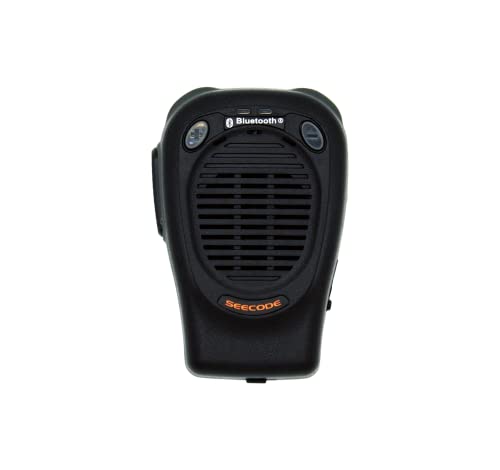
The SEECODE Remote Speaker Microphone (SCP960Plus) stands out for professionals seeking seamless communication in demanding environments. With its PTT button, Bluetooth capabilities, and walkie-talkie functions, you’ll enjoy effortless communication. Its noise-cancelling feature guarantees your voice remains clear even amidst chaos, handling up to 100dB of noise. Plus, you can connect with multiple groups globally using Zello. With an impressive 15 hours of talk time and a rapid recharge time under three hours, this microphone is built for durability, boasting an IP55 rating for water and dust resistance. It’s compatible with Android, iOS, and other Bluetooth devices, making it versatile.
Best For: Professionals in demanding environments who require reliable and clear communication solutions.
Pros:
- Bluetooth connectivity allows for compatibility with various devices, enhancing versatility.
- Noise-cancelling feature effectively minimizes background noise for clearer communication.
- Long battery life of up to 15 hours ensures extended use without frequent recharging.
Cons:
- IP55 rating may not provide complete protection in extremely wet or dusty conditions.
- May require a learning curve for optimal use of features like PTT and Zello.
- Limited functionality without a Bluetooth-enabled device, restricting usability.
UltraSync ONE Mini Lightweight Sync Unit for Multicamera Sync

For professionals seeking seamless multicamera synchronization, the UltraSync ONE Mini stands out as an exceptional choice. This lightweight sync unit is perfect for multicamera setups, VR rigs, and DSLR shoots. With LTC timecode and Genlock capabilities, it guarantees precise audio and video alignment. You’ll appreciate the impressive 200m synchronization range and support for up to 14 channels. The high-resolution OLED display makes monitoring easy, while the compact design simplifies transport and setup. Plus, its robust 8000mAh battery, charged via USB-C, assures extended operation during demanding shoots. Experience reliable performance and efficiency with the UltraSync ONE Mini in your gear arsenal.
Best For: Professionals in video production, including those working with multicamera setups, VR applications, and DSLR shoots, seeking reliable synchronization.
Pros:
- High-quality LTC timecode and Genlock features ensure precise audio and video alignment.
- Lightweight and compact design makes it easy to transport and set up.
- Long-lasting 8000mAh battery offers extended operation for demanding shoots.
Cons:
- The synchronization range of 200m may be limiting in larger production environments.
- Supports only up to 14 channels, which might not suffice for larger multicamera setups.
- Reliance on USB-C for charging may require additional equipment for some users.
Factors to Consider When Choosing a Wireless Timecode System for Cameras
When choosing a wireless timecode system for your cameras, you’ll want to take into account several key factors. Think about the range and connectivity options, as well as how accurately it meets timecode standards. Don’t forget to evaluate battery life, equipment compatibility, and the system’s portability and design features to guarantee it fits your needs.
Range and Connectivity Options
Choosing the right wireless timecode system for your camera involves understanding the range and connectivity options available. Some systems offer an effective range of up to 250 feet, ensuring reliable operation in various recording environments. You’ll typically find connectivity options like 2.4G RF and Bluetooth, providing flexibility for integration with different devices. Advanced technologies, such as Bluetooth 5.0, enhance connection range and stability, improving synchronization capabilities. Additionally, many systems support multiple channels, allowing you to use several devices simultaneously without interference. Having both RF and Bluetooth connectivity offers redundancy, ensuring your timecode system continues to operate smoothly, even if one connection type runs into interference. Make sure you consider these factors when selecting your wireless timecode system.
Timecode Accuracy Standards
Reliable connectivity options are just one piece of the puzzle in selecting the right wireless timecode system for your camera. Timecode accuracy is essential, typically measured in parts per million (ppm). Aim for a standard deviation of ±0.5 ppm for high-precision synchronization. You’ll want systems that maintain less than 1 frame of drift over 24 hours, ensuring reliability during long shoots. Look for those that adhere to SMPTE timecode standards, guaranteeing compatibility across various devices. A good system should also keep drift below 1 frame in 72 hours, making post-production editing smoother. Remember, accurate timecode synchronization simplifies your workflow and boosts production efficiency, so choose wisely for seamless results.
Battery Life and Efficiency
Battery life is a critical factor in selecting a wireless timecode system for your camera. Systems like the TC-1 can operate up to 24 hours on a single charge, perfect for long shoots without interruption. When choosing, look for quick charging solutions; USB options let you recharge during breaks, ensuring minimal downtime. Evaluate the battery capacity—some units come with up to 950mAh LiPo batteries, providing extended operational time for demanding schedules. Efficient battery management is also essential; systems with low power consumption maximize usage time, making them ideal for all-day shoots. Additionally, consider kits that include extra batteries, which can further enhance productivity by reducing the time between shoots and keeping your workflow smooth.
Compatibility With Equipment
When selecting a wireless timecode system for your camera, it’s essential to confirm compatibility with your existing equipment. First, verify the system supports SMPTE timecode for seamless synchronization across various audio and video devices. You’ll also want to check compatibility with both locking and non-locking 3.5mm TRS connections, which allows for versatile integration. Look for systems that accommodate multiple frame rates—23.98, 24, 25, and 29.97—so you can meet different production requirements. Additionally, consider wireless systems using Bluetooth or RF for reliable connectivity within your setup’s desired range. Finally, verify that the system can handle long battery life, ideally up to 24 hours, to support extended shooting sessions without interruptions.
Portability and Design Features
Once you’ve confirmed compatibility with your equipment, the next factor to take into account is the portability and design of the wireless timecode system. Look for lightweight options, ideally around 1.4 oz, to seamlessly integrate into your camera setup without adding bulk. Compact dimensions, like 2.1 x 1.5 x 0.85 inches, make transport and storage a breeze. Durability is vital; choose systems built to withstand diverse production environments for longevity. Features like hook-n-loop mounting enhance usability, allowing for versatile attachment options during shoots. Efficient power management is essential too; opt for systems that offer long battery life, such as up to 24 hours on a single charge, minimizing interruptions during your filming sessions.
Synchronization Capabilities and Channels
Choosing the right wireless timecode system hinges on its synchronization capabilities and channels, especially if you’re working with multiple recording devices. Look for systems that support multiple channels to connect various cameras and audio equipment seamlessly. Systems with SMPTE timecode support guarantee standardized synchronization, enhancing post-production efficiency. It’s also crucial to contemplate the maximum synchronization range; some systems can function effectively up to 250 feet, giving you flexibility in larger shooting setups. Pay attention to the drift rate—aim for devices with less than 1 frame of drift over 24 hours to maintain sync during extended shoots. Finally, guarantee compatibility with standard timecode connections, like locking 3.5mm TRS inputs/outputs, to avoid accidental disconnections.