When it comes to achieving perfect color accuracy in your photo prints, choosing the right calibration system is essential. In 2025, you’ll find an array of advanced tools designed to meet the needs of both professional photographers and enthusiasts. From the Calibrite Photo Kit to the Datacolor Spyder4Pro, each system offers unique features that enhance your printing process. But which ones truly stand out in this evolving landscape? Let’s explore the top contenders.
Calibrite Photo Kit – Display Pro HL and Passport Photo 2 (CCHL-PP2)

The Calibrite Photo Kit – Display Pro HL and Passport Photo 2 (CCHL-PP2) is the perfect choice for professional photographers and colorists who demand high-quality accuracy in their photo editing and printing processes. This kit includes the Display Pro HL colorimeter, which measures luminance up to 3,000 nits, ensuring precise color calibration. The ColorChecker Passport Photo 2, with its 24-patch target, helps you achieve accurate color under various lighting conditions. Plus, the included Calibrite Profiler software allows for custom settings, making it compatible with both Mac and Windows. Its future-proof design guarantees accuracy across new and existing display technologies.
Best For: Professional photographers and colorists seeking high-quality accuracy in photo editing and printing processes.
Pros:
- High luminance measurement up to 3,000 nits for precise color calibration.
- Comprehensive color matching with the ColorChecker Passport Photo 2’s 24-patch target.
- Compatible with both Mac and Windows operating systems, enhancing usability across platforms.
Cons:
- Price point may be higher than basic calibration tools, which could deter budget-conscious users.
- Learning curve associated with the advanced features of the Calibrite Profiler software.
- Limited to professional use, making it less suitable for casual photographers or hobbyists.
Calibrite Display 123 Colorimeter (CCDIS123)

For anyone immersed in photography, video editing, or design, the Calibrite Display 123 Colorimeter (CCDIS123) offers a straightforward solution for achieving precise color accuracy on your monitors. With its simple 1-2-3 calibration process, you can easily correct your monitor’s color to suit your needs. It supports calibration for two displays and lets you choose between Native or Photo brightness settings. Whether you’re gaming, shopping, or decorating, this user-friendly device enhances your viewing experience. Designed for both professionals and enthusiasts, the Calibrite Display 123 guarantees consistent color performance across various applications, making it an essential tool for accurate color representation.
Best For: Professionals and enthusiasts in photography, video editing, gaming, and design seeking accurate color representation on screens.
Pros:
- User-friendly interface makes calibration easy for all skill levels.
- Supports calibration for two displays, enhancing versatility for multi-monitor setups.
- Provides options for Native or Photo brightness, allowing tailored calibration to specific needs.
Cons:
- Limited to two display calibrations, which may not suffice for users with more extensive setups.
- The device may require regular recalibration to maintain color accuracy over time.
- Pricing might be a consideration for casual users who may not need professional-grade calibration tools.
Calibrite ColorChecker Studio (CCSTUDIO)
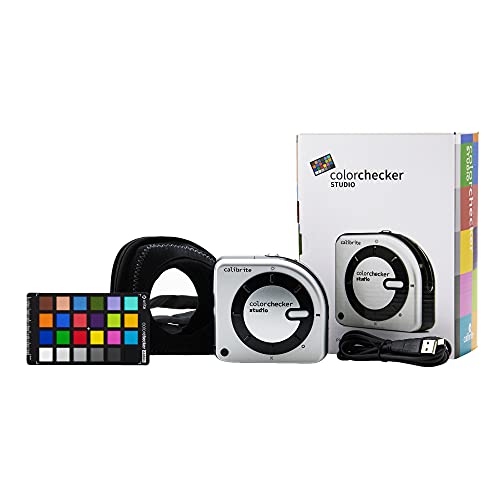
Designed for photographers and graphic designers who demand precise color accuracy, Calibrite ColorChecker Studio (CCSTUDIO) offers a seamless shift from the X-Rite i1Studio. It requires a software download for full functionality, enabling monitor, projector, scanner, and printer profiling. With the included ColorChecker Classic Mini target and ColorChecker Camera Calibration software, you can achieve excellent camera profiling. The Intelligent Iterative Profiling technology adapts to each unique display for best results. Plus, the ambient light measurement feature guarantees your display luminance matches the viewing conditions, enhancing your print comparisons. Powered by X-Rite, it guarantees top-tier color management solutions.
Best For: Photographers and graphic designers seeking precise color accuracy in their digital and print workflows.
Pros:
- Supports comprehensive profiling for monitors, projectors, scanners, and printers, enhancing color management across devices.
- Intelligent Iterative Profiling technology provides optimized results tailored to each unique display, ensuring maximum color accuracy.
- Ambient light measurement feature allows for accurate comparisons between prints and displays based on viewing conditions.
Cons:
- Requires a software download for full functionality, which may be inconvenient for some users.
- As a replacement for X-Rite i1Studio, users may need to familiarize themselves with new software features.
- The need for additional calibration targets may increase overall costs for users looking to maximize functionality.
High Resolution 8.5×11 Chrome SD Professional Lens Test Chart, 3-Pack

Achieving ideal lens performance is essential for photographers and videographers focused on capturing sharp, clear images. The High Resolution 8.5×11 Chrome SD Professional Lens Test Chart, 3-Pack, is your perfect companion for this task. These high-resolution charts help you assess and calibrate your lenses, ensuring professional-grade results. Their user-friendly design makes testing quick and accurate, so you can focus on creativity. Built to last, these robust charts offer great value with three included, optimizing your workflow. Compatible with various digital setups, they’re versatile tools for enhancing image quality and achieving true color accuracy in your work.
Best For: Photographers and videographers seeking to optimize lens performance for sharp, professional-grade images and videos.
Pros:
- User-friendly design simplifies lens testing and calibration, making it accessible for all skill levels.
- Durable construction ensures long-lasting use, maintaining accuracy even with frequent testing.
- Versatile compatibility with various digital photo and video equipment setups enhances image quality across different platforms.
Cons:
- Charts may be too small for some professional setups, as they are only 8.5×11 inches.
- Limited to lens calibration; not suitable for other types of photography or videography assessments.
- The price point may be higher than basic alternatives, though it offers better quality and durability.
Plustek OpticFilm 8200i AI – 35mm Film & Slides Scanner

The Plustek OpticFilm 8200i AI is ideal for photography enthusiasts and professionals looking to digitize 35mm film and slides with exceptional clarity. With a scanning resolution of 7200 dpi, you get impressive detail in every image. Its built-in infrared channel efficiently detects dust and scratches, making defect removal easier without retouching. Plus, the bundled Lasersoft Imaging SilverFast Ai Studio 9 software enhances your color correction capabilities. Supporting both Windows and Mac OS, this scanner is designed for seamless use. The IT8 Calibration Target guarantees precise color results, minimizing the need for repeated scans and perfecting your digital archive.
Best For: Photography enthusiasts and professionals who want to digitize 35mm film and slides with exceptional clarity and detail.
Pros:
- High scanning resolution of 7200 dpi ensures impressive detail in images.
- Built-in infrared channel effectively detects dust and scratches, streamlining defect removal.
- Bundled SilverFast Ai Studio 9 software enhances color correction and overall image quality.
Cons:
- Infrared detection feature does not work with black and white negatives.
- Limited to 35mm film and slides, which may not suit users with other formats.
- Requires compatible operating systems (Windows 7, 8, 10 and Mac OS 10.12 to 14.x) for full functionality.
Calibrite Creator Kit – Display 123 and Passport Video 2 (CC123-PPV2)

For content creators seeking precision in color management, the Calibrite Creator Kit—featuring the Display 123 and Passport Video 2—stands out as an essential tool. This kit streamlines your color management process, allowing you to set white points, exposure, and custom profiles effortlessly. With the Display 123, you can calibrate up to two monitors via USB-C, ensuring your colors remain accurate, even in mixed lighting. The included software optimizes your display settings for both native and photo brightness, boosting your editing confidence. Trust this kit to deliver consistent color matching across multiple cameras, enhancing your creative workflow.
Best For: Content creators and professionals seeking precise color management for video and photo workflows.
Pros:
- Easy calibration for up to two monitors via USB-C, ensuring consistent color accuracy.
- User-friendly software allows for effortless adjustments to white points, exposure, and custom profiles.
- Enhanced editing confidence with optimized display settings for native and photo brightness.
Cons:
- Limited to two monitors, which may not be sufficient for those with more extensive setups.
- Software may require a learning curve for users unfamiliar with color management tools.
- Price point may be higher compared to basic calibration tools, making it less accessible for casual users.
Lens Focus Calibration Tool Alignment Ruler Folding Card(Pack of 2)
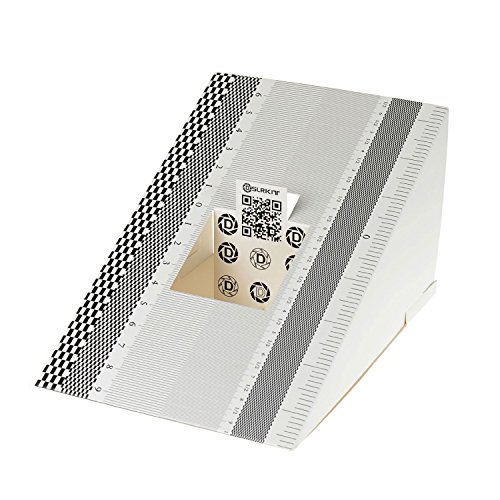
Photographers who demand precise focus in their images will find the Lens Focus Calibration Tool Alignment Ruler Folding Card (Pack of 2) invaluable. This compact ruler helps you assess your lens’s auto-focusing accuracy, especially critical when shooting with shallow depth of field. By using these cards, you can determine the focusing accuracy for your specific camera and lens combination, allowing you to adjust the auto-focus settings as needed. Compatible with Nikon’s AF Fine Tune and Canon or Sony’s AF Micro Adjustment, these rulers (measuring 19*12.3 cm) guarantee your images remain sharp and clear, optimizing your equipment’s performance.
Best For: Photographers who require precise focusing accuracy for their camera and lens combinations, particularly in shallow depth of field scenarios.
Pros:
- Easy to Use: Simple design allows for quick alignment and calibration of lens focusing.
- Compact Size: Portable and foldable, making it convenient for on-the-go photographers.
- Compatibility: Works with various camera brands, including Nikon, Canon, and Sony, enhancing versatility.
Cons:
- Limited to Specific Features: Only beneficial for cameras with auto-focus adjustment capabilities.
- Requires Manual Calibration: Users must have some understanding of their camera settings to utilize effectively.
- Not a Comprehensive Solution: Primarily focused on lens calibration, may not address other focusing issues.
Digital Kolor Pro 16:9 Large Color Calibration and Video Chip Chart, 2-Pack

Precision in color calibration makes the Digital Kolor Pro 16:9 Large Color Calibration and Video Chip Chart, 2-Pack, an ideal choice for videographers and editors who demand the highest quality in their work. Its superior accuracy with professional-grade chips guarantees precise color reproduction, optimizing your video quality. The 16:9 aspect ratio charts allow for detailed adjustments, making your workflow seamless. Built with robust materials, these charts resist wear and tear, assuring durability in demanding environments. Plus, their compatibility with various cameras and software, along with intuitive layouts, makes calibration quick and efficient for both beginners and experts alike.
Best For: Videographers and editors seeking precise color calibration and high-quality video production.
Pros:
- Superior accuracy with professional-grade chips ensures optimal color reproduction.
- Durable construction resists wear and tear, making it suitable for demanding environments.
- Compatible with various cameras and editing software, enhancing versatility in video workflows.
Cons:
- May require prior knowledge of color calibration for optimal use.
- Professional-grade features might be excessive for casual users or hobbyists.
- Limited to a specific aspect ratio (16:9), which may not suit all projects.
Calibrite ColorChecker Digital SG (CCDSG)

The Calibrite ColorChecker Digital SG (CCDSG) stands out as an essential tool for anyone involved in color-critical workflows, such as graphic designers and print professionals. This versatile device helps you check images, correct white balance, and perform extensive color analysis. With applications for checking films, lights, filters, and paper, it’s invaluable in any printing or proofing process. You can compare, measure, and analyze differences in color reproduction across multiple systems, ensuring your colors are accurate and consistent. Its target size of 8 x 11.5 inches makes it easy to work with, enhancing your color management capabilities.
Best For: Graphic designers and print professionals who require precise color management in their workflows.
Pros:
- Versatile applications: Suitable for checking films, lights, filters, and paper, making it valuable across various printing and proofing processes.
- Enhanced color accuracy: Facilitates the comparison, measurement, and analysis of color reproduction differences, ensuring consistent results.
- Convenient size: The target size of 8 x 11.5 inches is easy to handle and integrate into workspaces.
Cons:
- Initial cost: May represent a significant investment for individuals or small businesses.
- Learning curve: Users may require time to fully understand and utilize all features effectively.
- Limited to specific use cases: Primarily designed for color-critical workflows, which may not benefit all users in photography or design.
Datacolor Spyder4Pro S4P100 Colorimeter for Display Calibration

For anyone seeking reliable color accuracy in their display calibration, the Datacolor Spyder4Pro S4P100 Colorimeter stands out as an exceptional choice. With automated color and brightness calibration, it guarantees your displays remain consistent. The Fast Re-calibration Assistant (ReCAL) makes adjustments over time a breeze. Its full-spectrum color sensor effectively calibrates multiple displays with one unit. Featuring double-shielded color filters, this fourth-generation device improves accuracy by 26% and consistency between units by 19%. Plus, you can count on its long-term stability for dependable calibration results, making it an essential tool for any serious photographer or designer.
Best For: The Datacolor Spyder4Pro S4P100 Colorimeter is best for professional photographers and designers who require precise color accuracy in their display calibration.
Pros:
- Automated calibration simplifies the process and ensures consistent results.
- Fast Re-calibration Assistant (ReCAL) allows for easy adjustments over time.
- Improved accuracy and long-term stability offer reliable calibration performance.
Cons:
- May be considered expensive for casual users or hobbyists.
- Requires some initial setup and learning curve for optimal use.
- Limited to display calibration and does not include features for other types of color management.
Factors to Consider When Choosing a Photo Print Calibration System
When you’re choosing a photo print calibration system, think about your specific color accuracy needs and how easy the calibration process is. You’ll also want to check if the software is compatible with your existing setup and what display technologies it supports. Consider who will be using the system, as this can influence your final decision.
Color Accuracy Requirements
Color accuracy is essential in photo print calibration, as it guarantees your printed images reflect the colors you see on-screen. When choosing a calibration system, consider its ability to measure and correct color across various display technologies like LCD, mini-LED, and OLED. Advanced tools with ambient light measurement can optimize your display’s luminance, improving color reproduction based on your viewing conditions. Creating and using custom ICC profiles allows for tailored adjustments specific to your printer and paper type, enhancing overall accuracy. Regular calibration is also vital; automated tools can help maintain consistency over time, addressing drift in display performance from aging or environmental changes. Prioritize these factors to achieve professional, consistent results in your printed images.
Calibration Ease of Use
How easy is it to use your photo print calibration system? Look for options that feature a user-friendly interface, making the calibration process straightforward for both newbies and seasoned pros. Clear, step-by-step instructions are essential; they help you navigate the process without confusion. Automated calibration features can save you time and effort, allowing for quicker and more accurate color reproduction. You’ll also want systems that support easy re-calibration; this guarantees you maintain consistent color accuracy over time with minimal hassle. Finally, consider tools that are versatile and compatible with various display technologies, enhancing usability across different devices. Choosing wisely can make your calibration experience smooth and efficient.
Software Compatibility Options
Choosing a photo print calibration system requires careful consideration of software compatibility options, especially since you’ll want seamless integration with your existing setup. First, make sure the calibration system’s software works with your operating system, whether it’s Windows or Mac, to avoid installation headaches. Look for software that supports various calibration settings like white point, gamma, and ICC profiles to meet your color accuracy needs. If you shoot raw, consider software that includes custom camera calibration features for enhanced color reproduction. Verify the tool offers updates to stay compatible with evolving technologies. Finally, check if the software can profile different devices, such as monitors, printers, and cameras, for thorough color management throughout your workflow.
Supported Display Technologies
When selecting a photo print calibration system, you can’t overlook the compatibility with various display technologies. You’ll want a system that works seamlessly with LCD, mini-LED, OLED, and advanced panels like Apple XDR to guarantee accurate color reproduction. Make sure it supports a wide range of luminance levels, ideally up to 3,000 nits, to maintain precision in different lighting conditions. Look for systems equipped with sensors tailored to the specific characteristics of your displays, as each technology can show varied color performance. Additionally, verify the calibration software allows adjustments for white point and gamma settings, essential for optimizing color accuracy. A future-proof design will enhance your investment, keeping pace with emerging display technologies for ongoing color management needs.
Target Audience Considerations
Many factors come into play when considering the right photo print calibration system for your needs. First, think about your skill level; some systems demand advanced color science knowledge, while others cater to amateurs. Next, identify your primary purpose; if you’re a professional, you’ll likely prioritize accuracy and features, whereas casual users might prefer simplicity.
Also, evaluate the display technologies you use—certain systems work better with LCD, OLED, or mini-LED displays. Compatibility is essential; guarantee the system integrates smoothly with your operating systems and software tools. Finally, consider your budget. Calibration systems vary widely in price, so finding a balance between cost and functionality is key to satisfying your specific requirements.
Long-term Usability Features
As you consider a photo print calibration system, it’s crucial to focus on long-term usability features that guarantee your investment remains relevant over time. Look for calibration systems designed to maintain accuracy with both current and emerging display technologies. Selecting a system with software support for custom settings, like white point and ICC profiles, helps adapt to future color management needs. Regular software updates or enhancements guarantee compatibility with evolving standards and technologies. Opt for devices offering versatile calibration for multiple display setups, guaranteeing consistent performance across various applications. Finally, choose systems with durable construction and robust design to withstand frequent use without compromising accuracy. This way, you’ll guarantee your calibration system stands the test of time.
Additional Calibration Tools
Choosing the right additional calibration tools can greatly enhance the performance of your photo print calibration system. A colorimeter is essential for measuring display brightness and color accuracy, ensuring consistency in your editing and printing. Incorporating lens test charts helps assess lens performance and sharpness, important for high-quality prints. Professional calibration software can streamline your color management workflow, offering customization for white point, gamma, and ICC profiles across different devices. Ambient light measurement capabilities are also fundamental, as they help you determine best display settings based on viewing conditions, improving print comparison accuracy. Finally, opt for calibration tools compatible with various display technologies like LCD and OLED, ensuring your system remains adaptable as technology evolves.