When you’re aiming for flawless shooting and an efficient workflow, choosing the right camera tethering cable system is essential. With options ranging from 10ft to 16ft and high-speed data transfer rates, you can enhance your shooting experience considerably. These cables cater to various setups and are compatible with major brands like Canon and Sony. But which of these top 10 options will best suit your needs? Let’s explore the choices available to you.
USB-C to USB-C Camera Tethering Cable (10ft)

If you’re a professional photographer or videographer looking to enhance your shooting efficiency, the USB-C to USB-C Camera Tethering Cable (10ft) is an excellent choice. It supports 5Gbps high-speed data transfer, allowing instant image uploads to your computer. The bidirectional communication enables real-time previews during shoots, making it compatible with popular cameras and VR devices. Its ergonomic L-shaped design reduces wrist fatigue, perfect for extended use. With durable gold-plated connectors and a high-density nylon cover, this cable resists bending and scratches. Compact and stylish, it fits seamlessly into your kit while maintaining a professional appearance.
Best For: Professional photographers, videographers, and gamers seeking an efficient and reliable tethering solution.
Pros:
- 5Gbps high-speed data transfer for instant image uploads and efficient workflow.
- Ergonomic L-shaped design reduces wrist fatigue during extended use.
- Durable construction with gold-plated connectors and high-density nylon cover for long-lasting reliability.
Cons:
- Limited length of 10ft may not be sufficient for all shooting environments.
- Compatibility is mainly focused on specific camera brands, potentially limiting use with other devices.
- Price point may be higher compared to standard USB cables.
16ft USB-C to USB-C Camera Tethering Cable for DSLR Cameras
The 16ft USB-C to USB-C Camera Tethering Cable is the perfect choice for professional photographers and filmmakers seeking efficiency and reliability in their workflow. This cable supports high-speed data transfer at 5Gbps, allowing you to quickly transfer images and preview 4K footage seamlessly. It’s compatible with popular DSLR cameras like Canon, Sony, and Nikon, ensuring versatility for any shoot. Designed for durability, the gold-plated connectors resist oxidation, while the ergonomic L-bend minimizes stress on connections. With safety features like voltage regulation, you can trust this cable to protect your gear. Plus, it comes with a 1-year warranty for added peace of mind.
Best For: Professional photographers, filmmakers, and video production teams seeking a reliable and efficient tethering solution for their DSLR cameras.
Pros:
- High-speed data transfer at 5Gbps enables quick image transfers and 4K previews.
- Durable design with gold-plated connectors and ergonomic L-bend to minimize stress on connections.
- Safety features like voltage regulation protect equipment during high-load usage.
Cons:
- Length may be excessive for casual users or small studio setups.
- Limited compatibility with older camera models that do not support USB-C connections.
- Price point may be higher compared to standard USB cables.
COOYA Camera Tethering Cable USB C to USB C (16.4 ft)

Photographers and videographers seeking a reliable connection will appreciate the COOYA Camera Tethering Cable USB C to USB C, which boasts a 16.4 ft length and a 90° right angle design. This cable provides fast data transfer speeds of up to 5Gbps when paired with compatible USB 3.0 devices. Its sturdy construction minimizes stress on your camera’s interface and includes a cable clamp to prevent drooping. Compatible with various camera brands like Canon, Sony, FujiFilm, Nikon, and Panasonic, it’s perfect for seamless photo and video transfers. Plus, enjoy peace of mind with an 8-month warranty and responsive customer support.
Best For: Photographers and videographers looking for a durable and reliable tethering solution for seamless data transfer between their cameras and computers.
Pros:
- High-speed data transfer of up to 5Gbps with compatible USB 3.0 devices.
- 90° right angle design minimizes stress on the camera interface, enhancing durability.
- Includes a cable clamp to prevent drooping and ensure stable use during shooting.
Cons:
- Limited to cameras with a Type-C port, which may exclude some older models.
- May be too long for users who prefer shorter cables for portability.
- Right angle design might not be suitable for all shooting setups or camera placements.
15ft Professional Tethering Cable USB-C for Cameras (Compatible with Sony, Nikon, Canon, FujiFilm, Lumix)
Engineered for versatility, the 15ft Professional Tethering Cable USB-C is perfect for photographers using a variety of camera brands, including Sony, Nikon, Canon, FujiFilm, and Lumix. This cable features a USB-C Male to USB-C Male connector, supporting data transfer speeds up to 10 Gbps and delivering 100W power through its robust 24AWG copper wire. Whether you’re tethering for quick file transfers, connecting to monitors, or streaming, this cable handles it all. Plus, it’s designed for reliability and safety, making it a great choice for professional settings. Just check your camera’s manual to verify compatibility.
Best For: Professional photographers and videographers using a variety of camera brands who need reliable tethering and fast data transfer capabilities.
Pros:
- High data transfer speeds of up to 10 Gbps for efficient file transfers.
- Compatible with a wide range of camera brands and models, enhancing versatility.
- Built with durable materials for reliable performance in professional settings.
Cons:
- Some cameras may not support tethering, requiring users to check compatibility.
- Length of 15ft may be excessive for certain setups, leading to tangling or clutter.
- USB-C only; users with older USB types may need adapters for compatibility.
TetherPro USB-C to USB-C, 5Gbps Gen 1, 15′ (4.6m), High-Visibility Orange

For those who demand reliability and speed in their tethering setups, the TetherPro USB-C to USB-C cable delivers exceptional performance with its 5Gbps Gen 1 transfer rate. This 15-foot (4.6m) cable features nickel-plated tips and gold-plated pins, ensuring durability that meets the high standards of photographers and filmmakers. Its robust design protects against damage while fully shielding against signal interference, guaranteeing consistent conductivity. The high-visibility orange color makes tracking easy in various conditions, and it supports 60W power delivery for charging. Lightweight yet tough, this cable is perfect for your DSLR or mirrorless camera needs.
Best For: Professional photographers and filmmakers who require reliable and fast tethering solutions for their DSLR or mirrorless cameras.
Pros:
- High transfer speed of 5Gbps Gen 1 ensures quick file transfers.
- Durable construction with nickel-plated tips and gold-plated pins for long-lasting use.
- High-visibility orange color aids in easy tracking and reduces the risk of tripping.
Cons:
- Length may be excessive for some users needing shorter connections.
- Limited to USB-C devices, which may not be compatible with older equipment.
- Higher price point compared to standard USB-C cables may deter budget-conscious buyers.
20-Foot Mini USB to USB Type C Cable (Compatible with Various Devices)

If you’re looking for a reliable connection between your Mini USB devices and modern USB Type C laptops, the 20-foot Mini USB to USB Type C cable is an ideal solution. This versatile cable supports data transfer, live streaming, and tethering with compatibility across numerous devices like Canon, GoPro, and Yeti microphones. It connects seamlessly to laptops, including MacBooks and Dell models, ensuring you can shoot or stream without interruptions. Built for durability, it resists wear and breakage, making it a dependable choice for any photographer or content creator. Enjoy the extra length for flexible and efficient setups!
Best For: Photographers, content creators, and tech enthusiasts who need a reliable connection between Mini USB devices and USB Type C laptops.
Pros:
- Extra-long 20-foot length allows for versatile setups and easy maneuverability.
- Compatible with a wide range of devices, ensuring flexibility for various use cases.
- Durable construction resists wear and breakage, providing long-lasting reliability.
Cons:
- The length may be cumbersome for small spaces or on-the-go usage.
- Not suitable for devices that do not support Mini USB or USB Type C connections.
- Potentially overkill for users who only need shorter cables for occasional use.
Tether Tools TetherPro USB 2.0 to Mini-B 5-Pin Cable (15 Feet)

The Tether Tools TetherPro USB 2.0 to Mini-B 5-Pin Cable (15 Feet) is an ideal choice for professional photographers who demand reliability during photo shoots. Its high visibility orange design makes it easy to locate, and the cable is engineered for fast transfers between your camera and computer. Constructed with nickel-plated tips and gold-plated pins, it guarantees long-term durability while maintaining peak performance. The fully shielded cable protects against signal interference, assuring consistent connectivity. Lightweight and tough, it’s perfect for DSLR setups, enabling you to focus on capturing the perfect shot without worrying about your tethering connection.
Best For: Professional photographers who require a reliable and fast tethering solution for their DSLR setups.
Pros:
- High visibility orange design makes it easy to locate in various shooting environments.
- Durable construction with nickel-plated tips and gold-plated pins ensures long-term performance and reliability.
- Fully shielded cable protects against signal interference, maintaining consistent connectivity and transfer speeds.
Cons:
- Limited to USB 2.0 speeds, which may not be fast enough for some high-resolution cameras.
- 15-foot length may not be adequate for all shooting scenarios, potentially requiring an extension for larger setups.
- Mini-B connection may not be compatible with all camera models, limiting its versatility.
TetherPro USB-C to Mini-B 5-Pin Cable (15′, High-Visibility Orange)
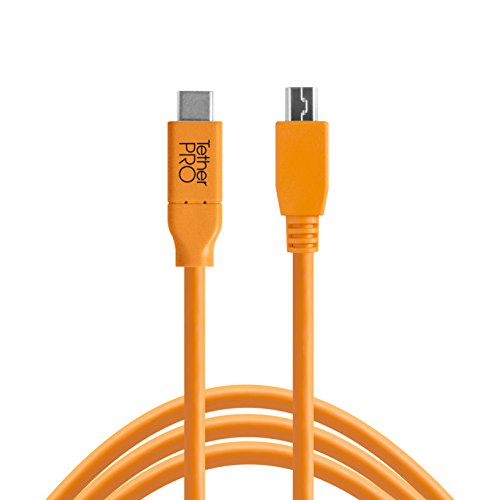
Photographers and filmmakers on location will appreciate the TetherPro USB-C to Mini-B 5-Pin Cable, especially with its high-visibility orange design that makes it easy to spot in busy environments. This 15-foot cable guarantees fast data transfers at 5Gbps, ideal for your DSLR or mirrorless setups. Constructed with nickel-plated tips and gold-plated pins, it’s built for professional use and long-term reliability. Its sturdy inner layer protects against damage, while its fully shielded design prevents signal interference. With its lightweight and durable build, you’ll find it user-friendly and dependable, enhancing your workflow during every shoot.
Best For: Photographers and filmmakers who require a reliable and high-performance cable for tethering their devices in various shooting environments.
Pros:
- Fast data transfer speeds of up to 5Gbps, ensuring efficient workflow during shoots.
- High-visibility orange design makes it easy to locate in busy or cluttered settings.
- Durable construction with nickel-plated tips and gold-plated pins for long-term use and reliability.
Cons:
- The 15-foot length may be too long for some setups, leading to excess cable management.
- Limited compatibility with devices that do not have USB-C or Mini-B ports.
- Higher price point compared to standard USB cables on the market.
MINIFOCUS Camera Cable Clamp with Arca Swiss System

Designed specifically for DSLR cameras, the MINIFOCUS Camera Cable Clamp with Arca Swiss System is a game-changer for tethered shooting. Its cable lock clip secures your cables, preventing any signal interruptions from loose connections. With two grooves accommodating cables from 4-7mm in diameter, you can wrap up to two cables simultaneously, whether HDMI, audio, or power. The compact design (38x20x13 mm) and lightweight build (17 g) make it easy to transport. Plus, it’s compatible with all Arca-Swiss quick release plates, ensuring seamless mounting and dismounting, while the durable aluminum alloy construction promises long-lasting performance.
Best For: Photographers and videographers who frequently engage in tethered shooting with DSLR cameras and require secure cable management.
Pros:
- Versatile Compatibility: Works seamlessly with all Arca-Swiss standard quick release plates for easy mounting and dismounting.
- Cable Management: Features two grooves that can hold multiple cables (up to 7mm in diameter), reducing clutter and preventing signal interruptions.
- Durable Construction: Made from high-quality aluminum alloy, ensuring longevity and wear-resistance during frequent use.
Cons:
- Limited Cable Size: Only accommodates cables with diameters ranging from 4-7mm, which may not fit all types of cables.
- Compact Size: While beneficial for portability, the small dimensions may make it challenging to handle for those with larger hands.
- Weight Limitations: Although lightweight, the use of multiple clamps may still add up in weight, potentially affecting the overall setup balance.
TetherPro USB-C to 2.0 Micro-B Cable (15′, High-Visibility Orange)
For those who rely on fast, reliable connections during shoots, the TetherPro USB-C to 2.0 Micro-B Cable (15′, High-Visibility Orange) stands out as an essential tool. This cable delivers impressive 5Gbps data transfer speeds, ensuring your images and videos upload quickly. Its nickel-plated tips and gold-plated pins enhance durability, while the sturdy inner layer protects against wear. The high-visibility orange color makes it easy to spot in any environment. Designed for both professional DSLR and mirrorless setups, this lightweight cable guarantees optimal performance, allowing you to focus on capturing stunning shots without worrying about connectivity issues.
Best For: Professional photographers and filmmakers seeking reliable and fast data transfer during shoots.
Pros:
- Fast data transfer speeds of up to 5Gbps for quick uploads of images and videos.
- Durable construction with nickel-plated tips and gold-plated pins, ensuring long-lasting use.
- High-visibility orange color makes it easy to locate in various working environments.
Cons:
- Limited to USB-C to Micro-B connectivity, which may not be compatible with all devices.
- 15-foot length may be excessive for some setups, leading to potential cable management issues.
- Higher price point compared to standard cables, which may not be justified for casual users.
Factors to Consider When Choosing a Camera Tethering Cable System
When you’re choosing a camera tethering cable system, you’ll want to take into account several key factors. Cable length, data transfer speed, and connector compatibility can greatly affect your workflow. Don’t forget to look at durability and ergonomic design features to guarantee a seamless shooting experience.
Cable Length Considerations
Choosing the right cable length for your camera tethering system can make a significant difference in your shooting experience. Common lengths range from 10ft to 20ft, so it’s essential to assess your specific needs. If you’re working in a larger studio setup or need freedom to move around, a 16ft or 20ft cable is your best bet. On the other hand, if you’re in a tight space, a 10ft cable might be more suitable to keep things organized and clutter-free. Don’t forget to think about your shooting environment; outdoor settings often require longer cables to navigate obstacles, while indoor setups may allow for shorter options. Always prioritize high-quality cables to avoid signal degradation, especially with longer lengths.
Data Transfer Speed
Understanding data transfer speed is essential since it directly impacts your workflow and shooting efficiency. Many tethering cables support speeds of up to 5Gbps or even 10Gbps, allowing immediate access to high-resolution files. This high-speed capability enables real-time preview displays during your shooting sessions, enhancing productivity and giving you the chance to make immediate adjustments. To achieve ideal speeds, choose cables that support USB 3.0 or higher, as older standards can slow down your transfer process considerably. For professional photographers and videographers working with high-resolution images or 4K video, fast data transfer is critical. Selecting a cable with high transfer rates can prevent bottlenecks, streamlining post-production and speeding up your editing turnaround times.
Connector Compatibility
While selecting a camera tethering cable system, connector compatibility is essential for ensuring seamless communication between your camera and computer. First, make sure both devices have compatible USB-C ports, as not all support these connections. Check if the cable meets the necessary USB standard, like USB 3.0 or USB 3.1, to achieve peak data transfer speeds of up to 5Gbps or more. Look for cables with ergonomic designs, such as right-angle connectors, to reduce stress on your camera’s port during use. Additionally, verify compatibility with your specific camera model since some cables work only with certain brands. Finally, consider the cable length to accommodate your shooting needs, especially in studio or on-location setups.
Durability and Build Quality
Durability and build quality are vital when selecting a camera tethering cable system, as they directly impact your shooting experience. Look for cables with gold-plated connectors; these resist oxidation and guarantee reliable connections even with frequent use. Choosing cables made from high-density materials, like TPE or nylon woven covers, provides excellent abrasion resistance and helps prevent bending or scratches. Additionally, opt for cables with a sturdy inner layer to protect against damage from regular use and storage. Fully shielded cables are important, too, as they prevent external signal interference, guaranteeing consistent data transfer during tethering sessions. By prioritizing these factors, you’ll enhance the longevity and reliability of your tethering setup.
Ergonomic Design Features
When choosing a camera tethering cable system, ergonomic design features can greatly enhance your shooting experience. Look for L-shaped connectors that minimize stress on your camera or computer interface, which helps reduce wear and tear over time. Cables with ergonomic grips can notably lessen wrist fatigue during long shoots, keeping you comfortable and focused. A well-designed tethering cable often includes a sturdy cable clamp that secures the connection, preventing drooping and ensuring a stable operation. Lightweight designs make handling and transporting easier during on-location shoots, so you can move freely. Additionally, connectors designed for user comfort allow for easier insertion and removal, enabling quick setup and breakdown of your equipment.
Safety and Protection
Ergonomic design features enhance comfort and usability, but safety and protection are just as important when selecting a camera tethering cable system. Choose cables with built-in safety features, like voltage regulation modules, to protect your sensitive equipment from damaging fluctuations during high-speed data transfers. High-quality cables with gold-plated connectors resist oxidation, guaranteeing reliable connections and minimizing signal loss. Look for cables designed with ergonomic features to reduce stress on camera interfaces, extending the lifespan of both the cable and your gear. Fully shielded cables are essential for protecting against external interference, maintaining data integrity. Finally, select cables made from durable materials that withstand wear and tear to guarantee consistent performance and lessen the need for frequent replacements.
Warranty and Support Options
Choosing a camera tethering cable system isn’t just about performance; warranty and support options play an essential role in your decision. First, check the warranty period offered, which typically ranges from several months to a year. This protects you against defects or issues that may arise. If you’re a professional, consider extended warranty options for added peace of mind.
Also, make sure the manufacturer provides accessible customer support for resolving technical difficulties or inquiries. Look for clear contact methods, like online chat, email, or phone support, to guarantee prompt assistance. Finally, review the warranty terms carefully, paying attention to exclusions for misuse or environmental damage. This way, you can make a well-informed choice that meets your needs.