In the fast-evolving world of videography, choosing the right 3-axis gimbal can make all the difference in achieving smooth and steady footage. With numerous options available in 2025, it’s essential to understand what features matter most for your projects. From lightweight designs to advanced tracking capabilities, each model offers unique benefits. Let’s explore the top contenders that could elevate your filmmaking experience.
DJI RS 3 Mini 3-Axis Gimbal Stabilizer for Cameras
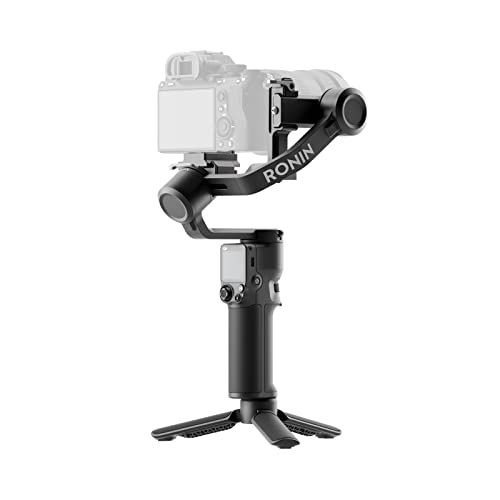
The DJI RS 3 Mini 3-Axis Gimbal Stabilizer is an ideal choice for videographers and content creators who need a lightweight and portable solution without sacrificing performance. Weighing just 795g, it’s perfect for extended shooting sessions. Its high-torque motors guarantee compatibility with various cameras and lenses, from Canon to Fujifilm, making it versatile for your needs. With advanced features like Bluetooth Shutter Control and a 3rd-Gen RS Stabilization Algorithm, you’ll capture smooth, professional-quality footage effortlessly. Plus, its native vertical shooting capability is great for social media content, while the quick-release plate makes mounting a breeze.
Best For: The DJI RS 3 Mini is best for videographers and content creators who need a compact and lightweight gimbal stabilizer for professional-quality footage.
Pros:
- Lightweight and portable design makes it easy to carry for extended shooting sessions.
- Versatile compatibility with multiple camera brands and lens combinations.
- Advanced stabilization features ensure smooth and professional footage capture.
Cons:
- Limited payload capacity may restrict use with heavier camera setups.
- Bluetooth connectivity may experience occasional delays in camera reconnection.
- Vertical shooting feature may not be needed by all users, potentially limiting its appeal.
DJI Osmo Mobile 7P Gimbal Stabilizer for iPhone and Android

For smartphone filmmakers seeking professional-quality footage, the DJI Osmo Mobile 7P Gimbal Stabilizer stands out with its robust 3-axis stabilization and intelligent tracking features. You’ll appreciate its quick-launch magnetic design, allowing for easy smartphone mounting. The gimbal powers on as you unfold it, and the Mimo app opens automatically for seamless filming. With a max operating time of 10 hours, you’ll have plenty of juice for your projects. Plus, the built-in extension rod and tripod are perfect for wide selfies and steady vlogs. Pair it with DJI Mimo’s editing tools to enhance your storytelling effortlessly.
Best For: Smartphone filmmakers seeking professional-quality footage with advanced stabilization and tracking features.
Pros:
- Robust 3-axis stabilization ensures smooth, cinema-quality shots even with fast-moving subjects.
- Quick-launch magnetic design allows for easy smartphone mounting and instant filming.
- Built-in extension rod and tripod enhance versatility for wide selfies and steady vlogs.
Cons:
- Limited to smartphone use, which may not satisfy professional videographers who prefer dedicated cameras.
- The maximum operating time of 10 hours may not be sufficient for longer shoots without recharging.
- The need for the DJI Mimo app may introduce a learning curve for new users unfamiliar with the software.
ZHIYUN CINEPEER Weebill 3E Gimbal Stabilizer for DSLR & Mirrorless Cameras

Designed with the content creator in mind, the ZHIYUN CINEPEER Weebill 3E Gimbal Stabilizer excels at providing smooth footage for both DSLR and mirrorless cameras. Weighing just 1.05 kg and compact like an A4 paper, it supports a maximum payload of 3 kg. You’ll appreciate its native vertical shooting capability and the quick-release plate for easy setup. The 2.5 Sling Mode allows low-angle shots while reducing fatigue. With up to 16 hours of battery life and fast charging, you’re set for all-day shooting. It’s compatible with various camera brands, making it a versatile choice for your filming needs.
Best For: Content creators and videographers looking for a lightweight, versatile gimbal stabilizer for DSLR and mirrorless cameras.
Pros:
- Native vertical shooting capability allows for creative filming without extra accessories.
- Long battery life of up to 16 hours ensures all-day shooting without interruptions.
- Compact and lightweight design minimizes fatigue during extended use.
Cons:
- Maximum payload of 3 kg may not support heavier camera setups.
- Additional control cables required for some camera brands may complicate setup.
- Charging time of nearly 3 hours may be inconvenient during busy shooting schedules.
DJI Osmo Mobile SE 3-Axis Phone Gimbal

Looking for a reliable gimbal that enhances your vlogging experience? The DJI Osmo Mobile SE is your go-to 3-axis phone gimbal, perfect for both iPhone and Android users. With a built-in tripod and selfie stick, it’s portable and foldable for easy transport. Enjoy smooth footage with its advanced 3-axis stabilization and ActiveTrack 6.0 technology, effortlessly following your subjects. Control it remotely via the DJI Mimo app on your Apple Watch, where you can also edit your videos with handy tools. Its ergonomic design and multiple shooting modes make it user-friendly, ensuring you capture stunning content every time.
Best For: Vloggers and content creators looking for a portable and user-friendly gimbal to enhance their smartphone videos.
Pros:
- 3-axis stabilization ensures smooth and professional-looking footage.
- ActiveTrack 6.0 technology allows for effortless tracking of subjects, great for dynamic shooting scenarios.
- Remote control via Apple Watch provides convenience for capturing moments without needing to touch the gimbal.
Cons:
- Compatibility may vary, requiring users to check if their specific phone model is supported.
- The reliance on the DJI Mimo app for full functionality may be cumbersome for some users.
- Limited battery life may require frequent recharging during extended filming sessions.
Zhiyun Weebill S 3-Axis Gimbal Stabilizer for Cameras
![Zhiyun Weebill S [Official] 3-Axis Gimbal Stabilizer for Mirrorless and DSLR Cameras](https://m.media-amazon.com/images/I/41dofxRBqiL._SL500_.jpg)
The Zhiyun Weebill S 3-Axis Gimbal Stabilizer is an ideal choice for videographers and photographers who need a reliable, compact solution for capturing smooth footage. Weighing just 2.04 pounds and about the size of A4 paper, it’s easy to handle. Its 8th Instune algorithm effectively eliminates jitters, ensuring high responsiveness during fast movements. With up to 14 hours of battery life and a dual focus control system, you’ll enjoy flexibility and extended shoot time. Plus, the OLED display provides real-time information, making it a must-have for serious creators. Rated 4.4 stars, it’s clearly a favorite among users.
Best For: The Zhiyun Weebill S 3-Axis Gimbal Stabilizer is best for videographers and photographers seeking a compact and reliable solution for smooth footage capture.
Pros:
- Compact and lightweight design, making it easy to handle and transport.
- Advanced stabilization technology effectively eliminates jitters during fast movements.
- Impressive battery life of up to 14 hours, allowing for extended shooting sessions.
Cons:
- Requires an additional TransMount Image Transmission Module for advanced transmission features.
- Some users may find the learning curve steep for mastering all functionalities.
- Limited compatibility with certain older camera models.
DJI Osmo Mobile 7 Gimbal Stabilizer for iPhone and Android

For content creators seeking unparalleled stabilization and tracking capabilities, the DJI Osmo Mobile 7 Gimbal Stabilizer stands out as an excellent choice. It features robust 3-axis stabilization, ensuring lossless stability for your shots. With DJI Mimos ActiveTrack 7.0, you can easily track subjects in any scenario. Weighing just 300 grams, its ergonomic design and built-in tripod make it perfect for solo shoots. Enjoy up to 10 hours of operation and charge your phone via USB-C. The DJI Mimo app enhances your creativity with tools like ShotGuides and One-Tap Edit, making filming and editing a breeze.
Best For: Content creators looking for professional-grade stabilization and tracking for filming and live streaming.
Pros:
- Robust 3-axis gimbal stabilization ensures lossless stability for smooth shots.
- Lightweight and portable design makes it ideal for outdoor filming and solo projects.
- Integrated battery life of up to 10 hours allows for extended use without interruptions.
Cons:
- DJI Mimo app is no longer available on Google Play, limiting accessibility for some users.
- Additional accessories, like the Tracking Kit, must be purchased separately for expanded capabilities.
- Limited compatibility with certain phone models, which may restrict usability for some users.
DJI RS 4 Combo 3-Axis Gimbal Stabilizer for Cameras

Designed specifically for DSLR and mirrorless camera users, the DJI RS 4 Combo 3-Axis Gimbal Stabilizer stands out with its native vertical shooting capability, allowing you to effortlessly switch between horizontal and vertical orientations. It features a joystick for easy mode toggling, including PF, PTF, and FPV modes, ensuring adaptability for various shooting needs. With a payload capacity of 3kg and Teflon-coated axis arms for smooth balancing, you can confidently use different camera-lens combinations. Plus, pairing it with the BG70 High-Capacity Battery Grip extends your runtime up to 29.5 hours, ensuring you never miss a moment.
Best For: The DJI RS 4 Combo is best for professional photographers and videographers using DSLR and mirrorless cameras who require stability and versatility in their shooting setups.
Pros:
- Native vertical shooting capability allows for easy transitions between horizontal and vertical orientations.
- Smooth balancing with Teflon-coated axis arms enhances the user experience and accommodates various camera-lens combinations.
- Extended battery life up to 29.5 hours when paired with the BG70 High-Capacity Battery Grip ensures long shooting sessions without interruptions.
Cons:
- Additional accessories like the BG70 Battery Grip are sold separately, increasing the overall cost.
- Requires some setup and balancing time, which may be challenging for beginners.
- DJI Ronin app is no longer available on Google Play, requiring users to download it from the DJI website, which could be inconvenient.
FeiyuTech SCORP Mini-3-Pro Gimbal Stabilizer for Cameras

Content creators looking for a reliable stabilizer will find the FeiyuTech SCORP Mini-3-Pro Gimbal to be an outstanding choice. This lightweight gimbal supports mirrorless, compact, action cameras, and smartphones, making it versatile for any project. With AI Tracking 4.0, you’ll enjoy instant responsiveness and 360° infinite tracking up to 18 meters. The ergonomic grip handle enhances comfort during filming, while the detachable handle doubles as a remote control for solo creators. Supporting a payload of 2kg, it guarantees ultra-stability. Plus, its modular design allows for quick shifts between shooting orientations, maximizing your creative potential effortlessly.
Best For: Content creators seeking a versatile and lightweight gimbal stabilizer for mirrorless, compact, action cameras, and smartphones.
Pros:
- AI Tracking 4.0 enables seamless 360° infinite tracking with quick response times.
- Ergonomic grip handle provides comfort for extended filming sessions and doubles as a remote control.
- Modular design allows for efficient transitions between horizontal and vertical shooting orientations.
Cons:
- Payload capacity may limit use with heavier camera setups beyond 2kg (4.4lbs).
- Learning curve may be required for users unfamiliar with gimbal operation and settings.
- Battery life may be a concern during prolonged shooting sessions without recharge.
GoPro Fluid Pro AI 3-Axis Gimbal Stabilizer for Cameras and Smartphones
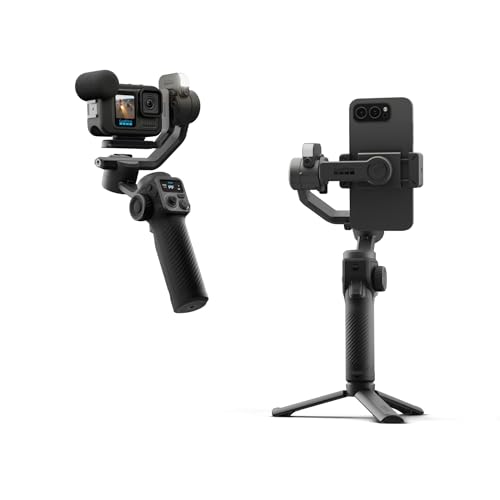
The GoPro Fluid Pro AI 3-Axis Gimbal Stabilizer stands out as an exceptional choice for vlogging enthusiasts and professional content creators alike. This gimbal’s AI subject tracker locks onto faces or bodies, ensuring your shots stay focused and dynamic. With its ability to charge devices and provide integrated lighting, you can achieve high-quality footage in any setting. It’s compatible with GoPro cameras and smartphones, making it versatile for various applications. Plus, the included accessories—like the mobile phone mounting bracket and tripod base—enhance its usability. Whether you’re filming a vlog or capturing a moment, this gimbal delivers impressive stability and performance.
Best For: Vloggers and professional content creators seeking high-quality stabilization and lighting for their videos.
Pros:
- Professional stability: The 3-axis gimbal provides exceptional stabilization for smooth footage.
- AI subject tracking: The intelligent tracking module ensures your focus remains on the subject, enhancing dynamic shots.
- Versatile compatibility: Works with GoPro cameras and smartphones, making it suitable for various filming needs.
Cons:
- Learning curve: Users may need time to become familiar with all features and settings.
- Battery life: Extended usage may require frequent recharging, especially during long shoots.
- Weight: While portable, it may be heavier than some other gimbals, potentially affecting comfort during prolonged use.
DJI Osmo Mobile 8 Gimbal Stabilizer for Phone

For anyone looking to elevate their smartphone videography, the DJI Osmo Mobile 8 Gimbal Stabilizer stands out with its impressive 3-axis stabilization and native tracking capabilities. You’ll love the seamless subject tracking for capturing sharp, clear footage. The gimbal features an ultra-comfortable grip, built-in tripod, and a foldable design for portability. With a 10-hour battery life, you can shoot extended events without worry, and it even charges your phone while filming. Plus, the easy tutorials and one-tap editing make it perfect for beginners. Just download the latest DJI Mimo app for the best experience, and you’re ready to create!
Best For: Anyone looking to enhance their smartphone videography with professional-level stabilization and tracking features.
Pros:
- 3-axis stabilization ensures smooth and professional-quality video footage.
- 10-hour battery life allows for extended shooting sessions without interruptions.
- Built-in tripod and foldable design enhance portability and versatility for various shooting angles.
Cons:
- The DJI Mimo app is not available on Google Play, requiring users to download it from the official website.
- Limited compatibility with certain smartphone models may restrict some users.
- Some users may find the learning curve for advanced features a bit steep if they are beginners.
Factors to Consider When Choosing a 3 Axis Camera Gimbal
When picking a 3-axis camera gimbal, you’ll want to take into account several key factors. Think about the weight and portability, as well as the payload capacity to verify it can handle your gear. Also, pay attention to stabilization technology, battery life, and compatibility with your cameras for the best results.
Weight and Portability
Choosing the right 3-axis camera gimbal hinges on its weight and portability. Lighter models, around 795g, are perfect for travel and long shooting sessions. A compact design, similar in size to A4 paper, makes it easy to transport and use in various environments. Some gimbals even have foldable designs, further enhancing their portability for convenient storage. Opting for a lightweight gimbal helps reduce user fatigue during extended shoots, which is vital for content creators who need to stay comfortable. However, don’t forget that balancing weight with payload capacity is significant. Your gimbal must effectively support your camera and lens while ensuring it remains easy to handle and maneuver. Choose wisely for smoother footage!
Payload Capacity
Finding the right balance between weight and functionality leads you to contemplate payload capacity in a 3-axis camera gimbal. This capacity refers to the maximum weight the gimbal can support while ensuring stability and smooth footage. Most consumer gimbals handle between 2 kg (4.4 lbs) and 3 kg (6.6 lbs), fitting various camera and lens combinations. Exceeding this limit can compromise stabilization, strain the motors, and risk damaging your gear. When choosing a gimbal, account for the total weight of your camera, lenses, microphones, and any other accessories. Opting for a gimbal with a higher payload capacity provides greater versatility, allowing you to use heavier, more professional equipment without sacrificing performance.
Stabilization Technology
To achieve smooth and professional-looking footage, understanding stabilization technology in a 3-axis camera gimbal is essential. The effectiveness of gimbal stabilization hinges on advanced algorithms like the 3rd-Gen RS Stabilization Algorithm, which dramatically reduces camera shake. High-torque motors are equally important, allowing your gimbal to support various camera and lens combinations without sacrificing stability. With 3-axis stabilization, you’ll enjoy cinematic quality, compensating for movements across pan, tilt, and roll axes. Additionally, features like ActiveTrack technology help you maintain focus on moving subjects, enhancing both stability and tracking. When choosing a gimbal, prioritize these stabilization features to guarantee you capture smooth, professional-grade footage, no matter the shooting conditions.
Battery Life
While stabilization technology plays an essential role in achieving smooth footage, battery life is another key aspect that can make or break your filming experience. When choosing a 3-axis camera gimbal, look for longer battery durations that allow for extended filming sessions without interruptions. Many models offer operating times between 10 to 16 hours, perfect for a full day of shooting. Fast charging capabilities are also a major plus, especially for time-sensitive projects. Additionally, consider gimbals that can power your camera and accessories, enhancing overall functionality. If you need even more endurance, high-capacity battery grips can provide continuous use for over 24 hours, ensuring you won’t miss that perfect shot.
Compatibility With Cameras
When choosing a 3-axis camera gimbal, ensuring compatibility with your camera model is essential for achieving ideal performance. Different gimbals support various brands and types, including DSLRs, mirrorless cameras, and smartphones. Check the gimbal’s maximum payload capacity to make sure it can handle your camera and lens combination without sacrificing stability. A quick-release plate system is also beneficial, allowing for easy mounting and dismounting, which enhances your shooting efficiency. Additionally, consider gimbals with Bluetooth or wired connections for seamless camera control, enabling remote operation during filming. Finally, assess the availability of control cables for your specific camera brand, as some gimbals may need extra accessories for full functionality.