As you prepare for the evolving landscape of live streaming and broadcasting in 2025, understanding the best camera genlock devices becomes vital. These tools not only enhance your production quality but also guarantee precise synchronization between audio and video. With a variety of options available, each offering unique features, you’ll want to know which ones stand out. Let’s explore the top contenders and what makes them essential for your setup.
Logitech Mevo Start Wireless Live Streaming Camera
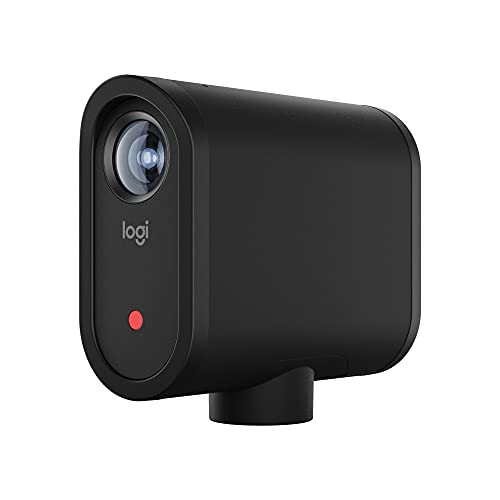
If you’re a content creator looking for a reliable and high-quality live streaming solution, the Logitech Mevo Start Wireless Live Streaming Camera is an excellent choice. You can capture stunning 1080p HD video and stream from anywhere using Wi-Fi, Ethernet, or your smartphone’s LTE. With the intelligent app control, you can wirelessly manage the camera and utilize features like Auto-Director to enhance your content. Plus, you can connect up to three Mevo Start cameras for dynamic broadcasts. Its built-in microphone guarantees clear audio, and you can even link external audio sources for advanced setups, making it perfect for versatile streaming.
Best For: Content creators seeking a portable and high-quality live streaming solution for various platforms.
Pros:
- Stunning Video Quality: Captures and streams in 1080p HD resolution for impressive visuals.
- Versatile Connectivity: Stream from multiple sources such as Wi-Fi, Ethernet, or smartphone LTE.
- Multi-Camera Support: Allows connection of up to three Mevo Start cameras for diverse angles and dynamic content.
Cons:
- Limited Battery Life: Extended streaming sessions may require an external power source.
- App Dependency: Full functionality relies on the smartphone app, which may not be convenient for all users.
- Audio Limitations: While it has a built-in microphone, external audio sources might be necessary for higher-quality sound in complex setups.
Elgato Cam Link 4K – External Capture Card for DSLR & Camcorder

The Elgato Cam Link 4K is the ultimate solution for content creators seeking a seamless way to connect their DSLR, camcorder, or action cam to a computer. With support for stunning 1080p60 and 4K30/4K60 video quality, you’ll capture every detail. Its ultra-low latency guarantees your video and audio stay perfectly in sync during live streams. Plus, it’s compatible with not just cameras but also camcorders, action cams, and even iPhones, providing versatile options for your content creation. By using an iPad with USB-C, you can even transform it into a professional field monitor for real-time shot previews.
Best For: Streamers, content creators, and videographers looking for high-quality video capture from their cameras and devices.
Pros:
- Supports high-resolution streaming and recording up to 4K60 for exceptional video quality.
- Ultra-low latency ensures perfect synchronization between audio and video.
- Versatile compatibility with DSLRs, camcorders, action cams, and iPhones for diverse content creation.
Cons:
- Requires a compatible camera for optimal performance, which may limit options for some users.
- Performance may vary based on the computer’s specifications and setup.
- Additional costs may be incurred for the necessary cables or adapters not included with the product.
Elgato Facecam 4K Studio Webcam

Looking to elevate your streaming or video conferencing game? The Elgato Facecam 4K Studio Webcam delivers stunning 4K resolution at 60 FPS, ensuring your visuals are sharp and vibrant. With its premium Sony STARVIS 2 CMOS sensor, you’ll capture every detail perfectly. Customize your look using Elgato’s Camera Hub software, applying effects just like a pro. Plus, it supports standard 49mm lens filters for that DSLR-style flair. Enjoy uncompressed video and HDR support while saving settings with built-in flash memory. Constructed from eco-friendly materials, this webcam is designed for reliable, sustainable performance that every content creator will appreciate.
Best For: The Elgato Facecam 4K Studio Webcam is best for content creators, streamers, and professionals seeking high-quality video performance for streaming, conferencing, and content production.
Pros:
- Exceptional 4K resolution at 60 FPS for crystal-clear visuals.
- Customizable settings and effects through Elgato’s Camera Hub software.
- Eco-friendly materials enhance sustainability while delivering reliable performance.
Cons:
- May require additional lens filters for desired effects, which are sold separately.
- Higher price point compared to standard webcams.
- Limited functionality without compatible software for full customization.
Guermok 4K USB3.0 HDMI to USB C Capture Card for Streaming
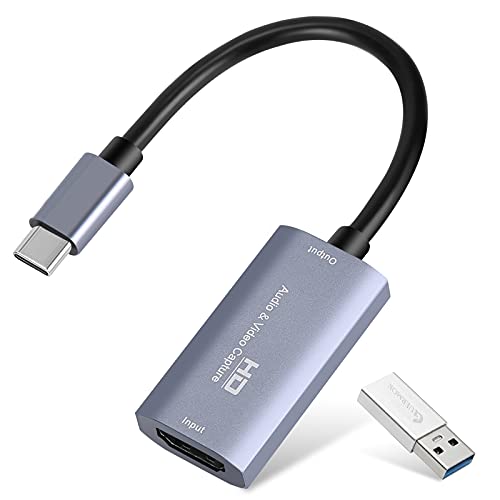
For streamers and content creators seeking high-quality video capture, the Guermok 4K USB3.0 HDMI to USB C Capture Card stands out with its impressive support for 1080P at 60FPS and 4K input resolution. This capture card features ultra-low latency, ensuring smooth real-time recording and live streaming. Its plug-and-play design means you won’t need extra drivers or power supplies, making it perfect for outdoor use. Compatible with various platforms like Windows, Mac OS, and gaming consoles, it covers all your streaming needs. Plus, its compact design allows for easy transport, so you can take your content creation anywhere.
Best For: Streamers and content creators looking for a high-quality, portable solution for live streaming and video capture.
Pros:
- Ultra-low latency allows for real-time recording and streaming without lag.
- Plug-and-play functionality eliminates the need for additional drivers or power supplies.
- Compact and lightweight design makes it easy to transport for outdoor streaming.
Cons:
- May require troubleshooting if recognized as USB 2.0 when using an adapter.
- Limited to 4K input resolution at 30Hz, which might not meet all users’ needs.
- Some users may find compatibility issues with certain devices or software.
USB Video Capture Card for RCA to USB Conversion
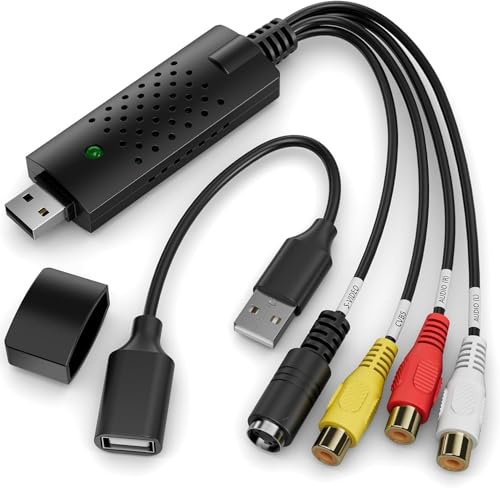
If you’re seeking a seamless way to digitize old video memories, a USB Video Capture Card for RCA to USB conversion is your ideal solution. This device captures video and audio from analog sources like VHS and VCR, converting them into a digital format you can easily store on your PC or TV. With plug-and-play functionality, it’s user-friendly and requires no external power. Plus, it supports HD 720P output, ensuring your memories retain their quality. Compatible with Windows and Mac, simply use recommended software like OBS Studio or QuickTime Player for effortless operation and enjoy your nostalgic moments in modern format.
Best For: Those looking to digitize old video memories from analog sources like VHS and VCR with ease and high quality.
Pros:
- User-friendly with plug-and-play functionality, requiring no external power.
- Supports HD 720P output, ensuring quality preservation of digitized media.
- Wide compatibility with various devices and operating systems, including Windows and Mac.
Cons:
- May require additional software installation for optimal performance.
- Limited to analog sources, not suitable for digital formats.
- Quality may vary based on the original source material.
Capture Card for Nintendo Switch and Streaming
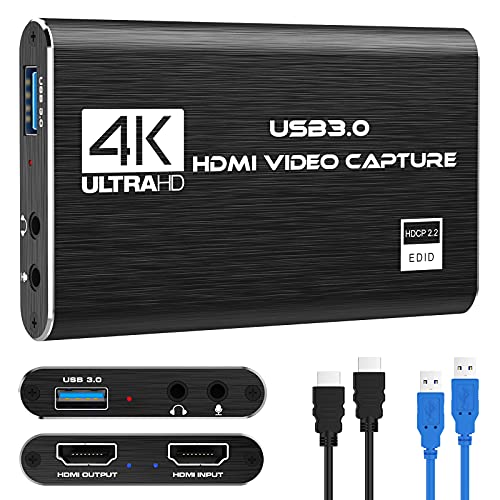
A 4K HDMI video capture card is the perfect solution for gamers and content creators enthusiastic to stream their Nintendo Switch gameplay in stunning detail. With the ability to capture at 1080p and 60FPS, you’ll deliver smooth and vibrant visuals. Thanks to high-speed USB 3.0 technology and low latency, your live streams will be seamless. Plus, it’s compatible with Windows and Mac OS, making setup a breeze—just plug and play. You can even add commentary with a 3.5mm microphone. This capture card guarantees your streaming experience is first-rate without hogging CPU resources or causing delays.
Best For: Gamers and content creators looking to stream high-quality Nintendo Switch gameplay with ease.
Pros:
- High-quality video capture at 1080p and 60FPS for vibrant visuals.
- Plug and play setup with no driver installation required, compatible with both Windows and Mac OS.
- Low latency technology ensures seamless live streaming without delays.
Cons:
- Limited to a maximum capture resolution of 1080p, may not meet the needs of those seeking 4K streaming.
- Optional audio capture may require additional equipment for best results.
- Some users may experience compatibility issues with specific HDMI devices.
Elgato 4K X Capture Card for Streaming & Recording

The Elgato 4K X Capture Card stands out as the ultimate choice for gamers and streamers who demand high-quality visuals and smooth performance. With the ability to capture up to 4K144 resolution and record high frame rates up to 240fps in 1080p, your streams will be crystal clear. Plus, its HDMI 2.1 support and VRR passthrough eliminate screen tearing during gameplay. You can easily connect to popular streaming apps like OBS and Twitch, ensuring flexibility across platforms. With ultra-low latency and compatibility with major consoles and PCs, it enhances your overall broadcasting experience seamlessly.
Best For: Gamers and streamers who seek high-quality visuals and smooth performance for their broadcasts.
Pros:
- Supports up to 4K144 resolution for crystal-clear streaming and recording.
- VRR passthrough eliminates screen tearing, enhancing the gameplay experience.
- Compatible with a wide range of devices and streaming platforms for versatile use.
Cons:
- Higher price point compared to standard capture cards.
- Requires USB 3.2 Gen 2 port for optimal performance, which may not be available on all devices.
- May need additional setup time for optimal configuration with various streaming applications.
Hollyland Vcore Wireless HDMI Video Transmission System

For content creators seeking seamless and real-time monitoring, the Hollyland Vcore Wireless HDMI Video Transmission System stands out with its ability to transform smartphones into advanced wireless monitors. Compatible with both Android and iOS devices, you can easily connect cameras and use the HollyView app for enhanced functionality. Enjoy low-latency 4K30 monitoring while recording pro-grade proxies at 1080p 60fps. Its dual-path recording saves files to an SD card and your mobile device simultaneously. With a 100-meter range and a built-in 5150mAh battery, Vcore streamlines your workflow, making it perfect for fast-paced shooting environments.
Best For: Content creators and videographers looking for a reliable and efficient solution for real-time wireless monitoring and recording.
Pros:
- Supports low-latency 4K30 monitoring and pro-grade proxy recording at 1080p 60fps.
- Dual-path recording allows simultaneous saving of files to both an SD card and mobile devices.
- Wireless transmission range of up to 100 meters with approximately 65ms latency for smooth video quality.
Cons:
- HDMI cables must be purchased separately based on camera models.
- Internal SD card for recording is sold separately, adding to the overall cost.
- Limited to 5GHz band for wireless connections, which may have interference in crowded environments.
VHS to Digital Converter, USB Video Capture Card

If you’re looking to preserve cherished memories from VHS tapes or camcorders, the VHS to Digital Converter and USB Video Capture Card stand out as an ideal solution. This device converts analog video into digital formats compatible with PC or Mac, automatically detecting NTSC, PAL, and PAL/60 formats. You can capture video in MP4 or other formats, making it perfect for editing. With a driveless setup, user-friendly software like OBS or QuickTime guarantees smooth operation. Supporting resolutions up to 1920×1080, it includes everything you need—USB capture device, RCA cable, and a helpful manual. Keep your memories alive with ease!
Best For: Those looking to preserve and digitize old VHS tapes, VCRs, and camcorder footage for easy access and editing.
Pros:
- User-friendly setup with driveless installation and compatibility with popular software like OBS and QuickTime.
- Automatic format detection for NTSC, PAL, and PAL/60 ensures seamless usage across various video sources.
- High-quality video capture at resolutions up to 1920×1080, allowing for detailed digital copies of cherished memories.
Cons:
- Limited advanced editing features as it primarily focuses on video capture rather than comprehensive editing tools.
- Resolution capture is source-dependent, which may affect quality if the original tape is of lower resolution.
- Requires a PC or Mac for operation, limiting use for those without access to these systems.
Osee GoStream Deck HDMI Pro Live Streaming Video Mixer Switcher

Designed for content creators and live streamers seeking professional production quality, the Osee GoStream Deck HDMI Pro Live Streaming Video Mixer Switcher elevates your broadcasting experience with its robust set of features. With four HDMI inputs and two outputs, you can connect multiple media sources effortlessly. Enjoy seamless streaming to three platforms simultaneously or record audio and video directly to an SD card. Its intuitive control panel and built-in menu system simplify live production without a PC. Plus, advanced graphics overlays and professional audio effects guarantee your streams stand out. Elevate your content with this powerful mixer!
Best For: Content creators and live streamers looking for professional-quality broadcasting solutions.
Pros:
- Versatile connectivity with four HDMI inputs and two outputs for multiple media sources.
- Simultaneous streaming to three platforms plus direct recording capabilities enhance production flexibility.
- Intuitive control panel and built-in menu system streamline live production without requiring a PC.
Cons:
- May have a learning curve for beginners unfamiliar with live streaming technology.
- Limited to HDMI and Type-C connections, which may not accommodate all devices without adapters.
- Price point may be higher compared to basic streaming solutions, potentially limiting accessibility for casual users.
Factors to Consider When Choosing a Camera Genlock Device
When you’re choosing a camera genlock device, there are several key factors to keep in mind. You’ll want to assess your video quality needs, guarantee compatibility with your existing gear, and consider latency and performance. Additionally, ease of use and connectivity options can greatly impact your overall experience.
Video Quality Requirements
Selecting the right camera genlock device is essential for achieving ideal video quality in your productions. First, prioritize the video resolution; choose devices that support at least 1080p, but aim for 4K if you want outstanding output. Next, consider the frame rate capabilities—devices with 60 FPS or higher will give you smoother motion, perfect for action-packed scenes. Don’t forget to evaluate latency specifications; lower latency is crucial for keeping multiple cameras in sync during live broadcasts. Look for versatility in video formats and standards, like NTSC and PAL, to guarantee compatibility with your equipment. Finally, assess how easily the device integrates with your existing setup and popular streaming software for a more streamlined production workflow.
Device Compatibility
Achieving high-quality video requires more than just understanding video resolutions and frame rates; it also hinges on how well your camera genlock device integrates with your existing equipment. Device compatibility is essential, so you’ll want to make sure the genlock device works seamlessly with your cameras, camcorders, and streaming gear. Check that it supports the specific video formats and resolutions like 1080p or 4K. Also, confirm compatibility with various operating systems—Windows, Mac, and Linux—to fit smoothly into your workflow. Look for devices that support industry-standard protocols such as HDMI, SDI, or NDI for versatile connectivity. Finally, verify that it can handle real-time synchronization for your specific needs, whether live streaming, broadcasting, or multi-camera setups.
Latency and Performance
Latency and performance are critical factors to evaluate for any camera genlock device, especially if you’re working with live streaming or multi-camera setups. Latency refers to the delay between the input signal and the output signal, which can disrupt synchronization. Look for devices that feature ultra-low latency technology, as this minimizes delays, ensuring your audio and video streams remain in sync. The type of connection matters too; USB 3.0 generally offers better performance than USB 2.0, thanks to higher bandwidth. Devices with advanced encoding technologies can further cut latency, resulting in smoother transmission. Finally, consider the maximum supported frame rates and resolutions, as these can influence the device’s ability to maintain low latency under various conditions.
Ease of Use
When you’re choosing a camera genlock device, ease of use can make all the difference, especially in high-pressure situations like live events. Opt for devices with plug-and-play functionality; they usually don’t need extra drivers or power supplies, allowing for quick setups. Look for intuitive interfaces that simplify navigation and control, enhancing your experience in fast-paced environments. Clear instructions or manuals are essential, ensuring a smooth setup for users at any skill level. Built-in monitoring features can provide real-time feedback, enabling you to make adjustments easily. Finally, consider products with strong customer support options—having access to professional assistance can boost your confidence and simplify troubleshooting when you need it most.
Connectivity Options
In high-stakes environments, the right connectivity options can greatly enhance your camera genlock setup. Most genlock devices use BNC connectors, which guarantee stable video signals across multiple cameras. You’ll often find systems supporting HDMI and SDI connections, making it easy to integrate with various video equipment. Consider whether the genlock device is compatible with your camera’s output formats, like 1080p or 4K resolutions. Some modern solutions offer Ethernet connectivity for remote management, simplifying adjustments during live productions. If you’re looking to minimize cable clutter, certain systems even provide wireless options, boosting mobility in dynamic shooting environments. By carefully evaluating these connectivity features, you can optimize your genlock setup for seamless synchronization.
Additional Features
Choosing the right camera genlock device involves more than just connectivity; it’s vital to take into account additional features that enhance performance. First, check for compatibility with various camera models and formats to guarantee seamless integration into your setup. Low latency synchronization is essential for maintaining audio and video alignment during live broadcasts, so prioritize devices that offer this feature. Also, consider support for multiple input and output formats to increase versatility in different production environments. Real-time monitoring and proxy recording capabilities can streamline your workflow and boost post-production efficiency. Finally, investigate the device’s construction and heat dissipation features, as these aspects notably impact overall reliability during extended use.