When it comes to managing your photography gear, having a reliable camera docking station can make all the difference. These devices not only keep your workspace organized but also guarantee your equipment is charged and ready for action. With various options tailored to different needs, it’s crucial to know what to look for. Let’s explore the top contenders that can elevate your organization and charging game.
USB C Laptop Docking Station Dual Monitor Hub (14 in 1)

If you’re a multitasking professional who relies on multiple displays, the USB C Laptop Docking Station Dual Monitor Hub (14 in 1) is an ideal solution for you. With 14 ports, including dual HDMI and DisplayPort for 4K resolution, you can effortlessly connect multiple monitors. The hub supports fast data transfers up to 10Gbps through USB A 3.1 ports, making file management a breeze. Plus, it provides 100W power delivery to keep your devices charged while you work. Enjoy stable wired connections via Ethernet and easily access your SD/Micro SD cards. This docking station enhances your productivity with its versatile capabilities.
Best For: Multitasking professionals who need to connect multiple displays and require fast data transfers.
Pros:
- Supports dual and triple monitor setups, allowing for versatile display configurations.
- Fast data transfer speeds of up to 10Gbps via USB A 3.1 ports, enhancing file management efficiency.
- 100W power delivery ensures your devices stay charged while you work.
Cons:
- Compatibility limited to specific laptops with Thunderbolt 3/4 or USB-C with video output.
- Charging cable/adapter not included, which may require an additional purchase.
- MacBook users only get mirrored displays, limiting display options compared to Windows users.
Dell Pro Smart Dock SD25 – USB-C Station with 130W Charging

The Dell Pro Smart Dock SD25 is an ideal choice for professionals managing multiple displays, as it supports up to four screens with HDMI 2.1 and dual DisplayPort 1.4 connections. You’ll appreciate the ambidextrous USB-C cable routing options, allowing for a customized workspace that suits your preferences. Plus, with 130W charging, your devices will stay powered throughout the day. Remote management via the Dell Device Management Console simplifies configuration and updates, while enterprise-grade WPA-3 encryption guarantees your data remains secure. Constructed with 65% recycled materials, this dock also reflects a commitment to sustainability, making it an environmentally conscious choice.
Best For: Professionals who require multiple display setups and secure, efficient remote management options.
Pros:
- Supports up to four displays with various connection options, enhancing productivity.
- Offers ambidextrous cable routing for a customizable and organized workspace.
- Incorporates enterprise-grade security features to protect sensitive data.
Cons:
- May be overkill for users who only need to connect one or two displays.
- Higher price point compared to simpler USB-C docks.
- Setup and management may require some technical know-how for optimal use.
Dell Pro Dock WD25 – USB Type-C Docking Station
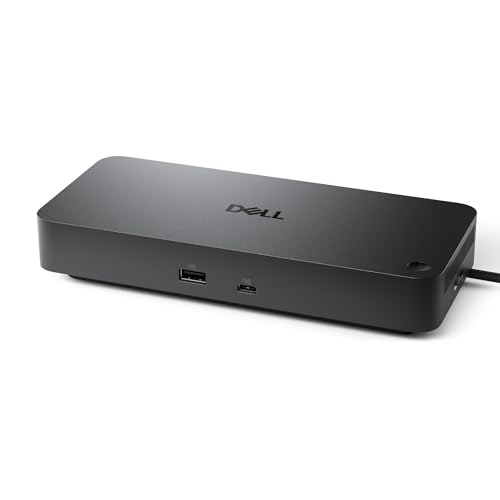
Designed for professionals seeking seamless connectivity, the Dell Pro Dock WD25 – USB Type-C Docking Station delivers up to 100W of power, making it ideal for both Dell and non-Dell devices. With versatile DisplayPort and HDMI options, you can easily connect up to four high-resolution displays. The ambidextrous USB-C cable allows for flexible routing, enhancing usability in any workspace. Plus, its robust design guarantees durability, while its management features boost IT efficiency. You’ll appreciate its sustainability, too, as it reduces power consumption by up to 72% in standby mode and is made from recycled materials.
Best For: Professionals seeking seamless connectivity and high-performance power delivery for both Dell and non-Dell devices.
Pros:
- Versatile Connectivity: Supports up to four high-resolution displays via DisplayPort and HDMI.
- Durable Design: Features a robust USB-C connector and an ambidextrous cable for flexible routing.
- Sustainability Focus: Achieves up to 72% reduction in power consumption in standby mode and is constructed from recycled materials.
Cons:
- Limited Compatibility: While it supports non-Dell PCs, some features may be optimized primarily for Dell devices.
- Price Point: May be considered expensive compared to other docking stations with fewer features.
- Bulkiness: The design may take up more space on a desk compared to slimmer alternatives.
Anker 13-in-1 USB-C Laptop Docking Station

For professionals and creatives who require multiple displays, the Anker 13-in-1 USB-C Laptop Docking Station stands out with its ability to support triple display setups. With two HDMI ports and one DisplayPort, you can effortlessly stream to three monitors in stunning 1080p@60Hz. This dock features an 85W charging USB-C port, allowing you to charge your laptop while using an 18W port for your mobile device. You’ll enjoy a range of connectivity options—three USB-A ports, Ethernet, and SD card slots—making it compatible with most devices, including Dell, HP, and Lenovo laptops. Get organized and powered up with ease!
Best For: Professionals and creatives who need to connect multiple displays and devices for enhanced productivity.
Pros:
- Supports triple display setups with dual HDMI and one DisplayPort for seamless multitasking.
- 85W charging capability allows simultaneous charging of your laptop and mobile devices.
- Versatile connectivity options including multiple USB-A ports, Ethernet, and SD card slots compatible with various devices.
Cons:
- Limited macOS and iPadOS support to only Single-Stream Transport mode, resulting in identical content on external monitors.
- Not compatible with Linux, which may limit usage for some users.
- Potentially large footprint on your workspace due to multiple ports and connections.
TobenONE MacBook Docking Station Dual Monitor 4K

If you’re a MacBook Pro or Air user looking to enhance your productivity with dual 4K monitor support, the TobenONE MacBook Docking Station is an ideal choice. This docking station boasts 13 versatile ports, including 2 HDMI and VGA, enabling seamless connectivity for dual displays. You can enjoy stunning visuals at 60Hz or mirror displays for presentations. With a powerful 100W PD USB-C hub, it charges your MacBook while you work. Its sleek vertical design saves desk space and keeps your cables organized, allowing you to focus on what matters most—your work. Upgrade your setup with TobenONE!
Best For: Users of MacBook Pro and Air models (2016-2024) looking to enhance their productivity with dual 4K monitor support.
Pros:
- Supports dual 4K monitors at 60Hz for high-quality visuals.
- Includes 13 ports for versatile connectivity options, including HDMI, USB, and SD/Micro SD.
- Sleek vertical design optimizes desk space and improves cable management.
Cons:
- Requires macOS 14.6 or later for M3 chip users to prevent dual-display issues.
- May be overkill for users who do not need dual monitor setups.
- Limited to specific MacBook models, restricting compatibility with other laptops.
Dell Pro Thunderbolt 4 Smart Dock SD25TB4

The Dell Pro Thunderbolt 4 Smart Dock SD25TB4 is an ideal choice for creative professionals and data analysts who need robust multi-display capabilities. You can connect up to four 4K monitors using HDMI 2.1, DP 1.4, USB-C, and Thunderbolt 4, making multitasking seamless. With 130W USB-C charging for Dell devices and 96W for others, it keeps your gear powered up. The dual Thunderbolt 4 ports allow for dual 4K video output and connection for up to six devices. Plus, its sustainable design, crafted from 65% recycled plastic, adds an eco-friendly touch to your workspace.
Best For: Creative professionals and data analysts seeking robust multi-display capabilities and efficient connectivity.
Pros:
- Supports up to four 4K monitors for enhanced multitasking.
- Provides 130W USB-C charging for Dell devices and 96W for others.
- Features remote management and advanced security options for business use.
Cons:
- May be overkill for casual users who do not require multiple displays.
- Higher price point compared to basic docking stations.
- Limited to specific connectivity options which may not suit all devices.
Plugable 13-in-1 USB C Docking Station (UD-ULTC4K)
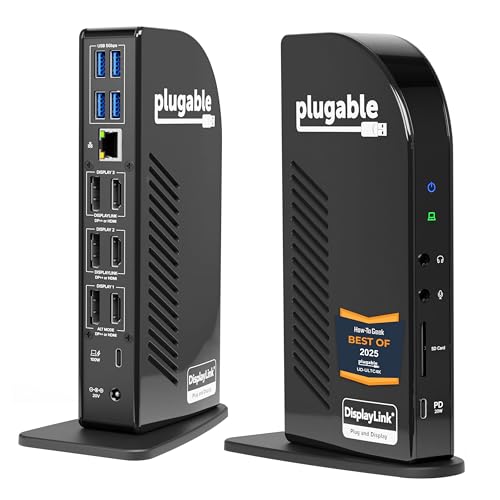
Designed for professionals who demand versatility, the Plugable 13-in-1 USB C Docking Station (UD-ULTC4K) transforms your workspace with its ability to support triple 4K displays. With 13 ports, including USB-C for 100W charging and multiple HDMI/DisplayPort outputs, connecting your devices is seamless. You can easily power your laptop through the dock, eliminating extra adapters while on the go. Compatible with Windows, macOS, and ChromeOS, it requires DisplayLink drivers for peak performance. Weighing just over a pound and highly rated by users, this docking station is your go-to solution for a clutter-free, efficient setup.
Best For: Professionals seeking a versatile docking station to enhance their multi-monitor workspace with seamless connectivity.
Pros:
- Supports triple 4K displays at 60Hz for an expansive visual experience.
- Provides 100W Power Delivery, allowing direct laptop charging through the dock.
- Compatible with multiple operating systems including Windows, macOS, and ChromeOS.
Cons:
- Requires installation of DisplayLink drivers for full functionality.
- HDCP (streaming services) is not supported, limiting media playback options.
- May require additional adapters for non-compliant devices.
Anker 7-in-1 USB-C Hub, Dual Monitor Docking Station

For professionals and creatives who demand seamless multitasking, the Anker 7-in-1 USB-C Hub stands out as an ideal choice. This dual monitor docking station allows you to connect two HDMI displays at 1080p@60Hz, enhancing your workflow. With a lightning-fast 10Gbps data transfer rate and 85W maximum output for charging, you’ll keep all your devices powered and ready. It’s compatible with MacBook, Windows, and ChromeOS, ensuring versatility across your tech. Compact and lightweight, this hub fits easily into your bag. With a solid 4.3-star rating from users, it’s a reliable addition to your workspace setup.
Best For: Professionals and creatives who need a reliable solution for multitasking with dual monitor capabilities.
Pros:
- Versatile connectivity with support for USB-C, USB4, and Thunderbolt devices.
- High-resolution dual display output at 1080p@60Hz for improved productivity.
- Fast data transfer speeds of up to 10Gbps, ensuring efficient file management.
Cons:
- Limited compatibility as it does not support Linux operating systems.
- Requires laptops with DP Alt Mode and Power Delivery for full functionality.
- May be less portable for users who need a more compact solution, despite its lightweight design.
Acer 11-in-1 Laptop Docking Station
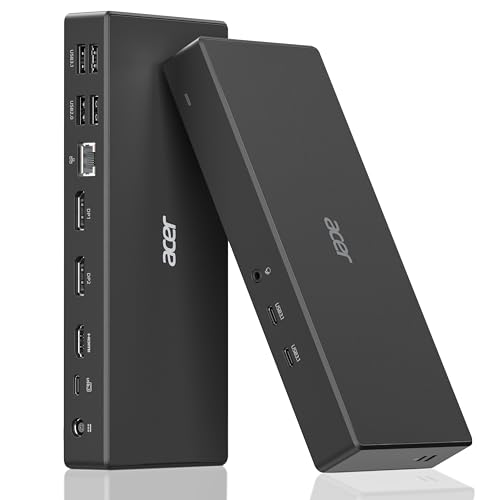
If you need a versatile solution for enhancing your workspace, the Acer 11-in-1 Laptop Docking Station is an excellent choice. It supports up to three monitors with stunning 4K resolution, allowing you to multitask effortlessly. With multiple ports—including USB-C, USB-A, and Ethernet—data transfer speeds reach up to 5Gbps, ensuring quick connections. Plus, you can charge your laptop with up to 85W while you work. The included cables offer flexibility, and the built-in Kensington lock adds security. This docking station combines functionality and design, making it a smart addition to any setup.
Best For: Professionals and multitaskers who require multiple monitor setups and fast data transfer capabilities.
Pros:
- Supports up to 3 monitors with 4K resolution for enhanced multitasking.
- Provides multiple ports for various devices, including fast data transfer speeds up to 5Gbps.
- Charges laptops while in use with up to 85W power delivery, ensuring uninterrupted productivity.
Cons:
- Requires laptops to support USB-C with DisplayPort Alt Mode for full functionality.
- May be more expensive compared to simpler docking stations with fewer features.
- Limited to specific display output capabilities based on laptop specifications and connected monitors.
TobenONE DisplayLink Docking Station for 4 Monitors

The TobenONE DisplayLink Docking Station is perfect for professionals who need to connect multiple monitors for enhanced productivity. With support for up to four stunning 4K@60Hz displays, it transforms your workspace. You’ll appreciate its 20 ports, including four HDMI and four DP connections, along with USB options for all your devices. The 150W power adapter efficiently charges your laptop and phones, keeping everything organized. Compatible with various operating systems, including Windows and MacBooks, it’s designed for seamless multitasking. Plus, you’ll benefit from a 2-year warranty and dedicated customer support for peace of mind with your investment.
Best For: Professionals who require multiple displays for enhanced multitasking and productivity.
Pros:
- Supports up to four 4K@60Hz monitors for an immersive and high-definition viewing experience.
- Offers a wide range of connectivity options with 20 ports, including HDMI, DisplayPort, and USB connections.
- Includes a powerful 150W power adapter that charges both laptops and phones while keeping the workspace organized.
Cons:
- Requires installation of Displaylink drivers for functionality, which may be an added step for users.
- HDCP is not supported, which may limit compatibility with certain content protection needs.
- MacBooks with M1 chips are limited to three external monitors, which could be a drawback for Mac users.
Factors to Consider When Choosing a Camera Docking Station
When choosing a camera docking station, you need to take into account several key factors. Think about compatibility with your devices, charging power delivery, and display support options. Don’t forget to check data transfer speeds and the overall build quality and design to guarantee it meets your needs.
Compatibility With Devices
Choosing a camera docking station that fits your needs requires careful attention to compatibility with your devices. First, check the connection type—USB-C, Thunderbolt, or DisplayPort—so everything functions smoothly and supports video output. Next, guarantee the docking station can deliver the necessary power to charge your device efficiently, as higher wattage may be required for peak performance. It’s also vital to verify compatibility with your operating system, whether it’s Windows, macOS, or ChromeOS, since not all stations work seamlessly across platforms. If you’re considering multiple monitors, look for stations that support the resolution and refresh rates you need. Finally, confirm if any additional drivers or software are required for advanced features to operate correctly.
Charging Power Delivery
Understanding the charging power delivery capabilities of a camera docking station can make all the difference in your workflow. When choosing one, look for higher wattage options—up to 100W—to guarantee efficient charging while you work. Make sure the docking station’s power delivery matches or exceeds your camera’s requirements to prevent interruptions. Some models offer simultaneous charging, allowing you to power multiple devices like your camera and smartphone through separate USB-C ports with varying outputs, such as 85W and 18W. Also, check for compatibility with Power Delivery specifications; this affects charging speeds. A reliable docking station should include safety features to guard against overcharging or power surges, extending the life of your valuable equipment.
Display Support Options
As you explore camera docking stations, the display support options can greatly impact your setup. First, consider how many external displays you need; some stations connect up to four monitors at once. Check the maximum resolution supported, as options typically range from 1080p to 4K, varying by configuration. Compatibility with display interfaces like HDMI, DisplayPort, or VGA is vital since it determines your monitor choices. Evaluate if the docking station supports extended or mirrored display modes, enhancing your productivity with different content across screens. Finally, verify the display capabilities align with your operating system requirements, as some may require specific drivers or configurations to operate smoothly. This will help you create an efficient and organized workspace.
Data Transfer Speeds
When it comes to camera docking stations, data transfer speeds play an essential role in your workflow efficiency. USB 3.1 ports can transfer data at speeds up to 10 Gbps, vastly outpacing USB 2.0’s 480 Mbps. If you often handle large files or engage in data-heavy tasks, look for docking stations with USB-C and USB-A 3.1 ports. These options can enhance your productivity by allowing simultaneous data transfers across multiple ports, so you can connect and use several devices at once without lag. Additionally, accessing SD/microSD card slots at high speeds streamlines importing high-resolution photos and videos. Just remember to check your laptop’s compatibility with these speeds to maximize performance.
Build Quality and Design
Selecting a camera docking station involves more than just data transfer speeds; build quality and design are equally important for a smooth user experience. You’ll want a docking station made from durable materials, like recycled plastics, ensuring longevity and sustainability. A robust design features ambidextrous cable routing and a compact footprint, optimizing your workspace. Don’t overlook heat dissipation; look for models with ventilation holes to prevent overheating during extended use. Consider the weight and size for portability, especially if you travel often. Finally, ergonomic elements like a vertical stand can enhance desk management, improving your efficiency. Prioritizing these factors will lead to a more enjoyable and functional setup for your camera equipment.